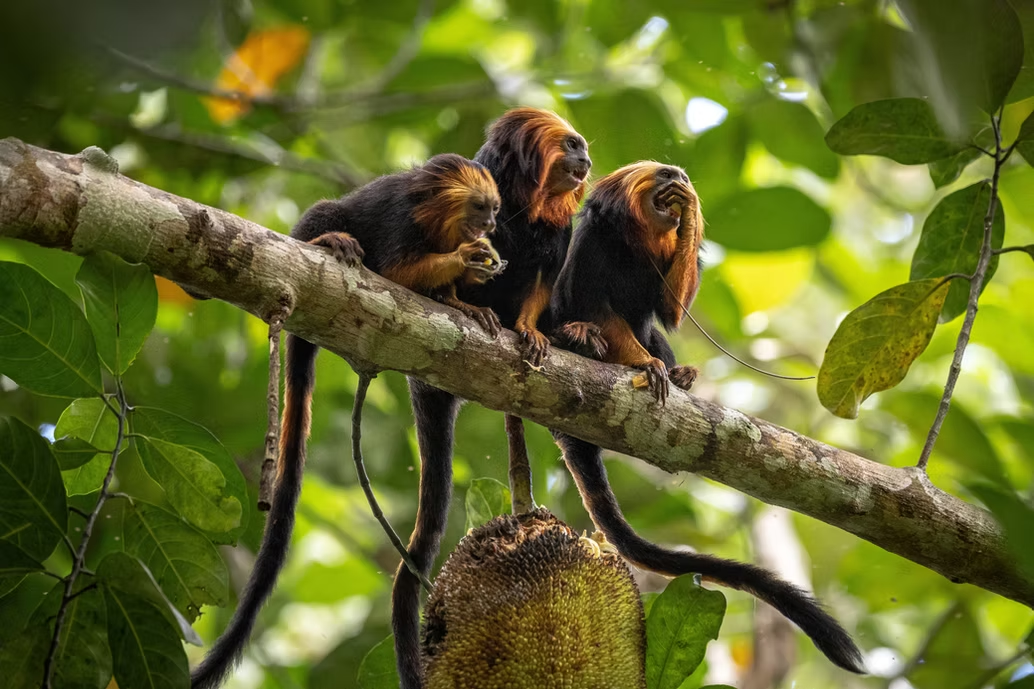
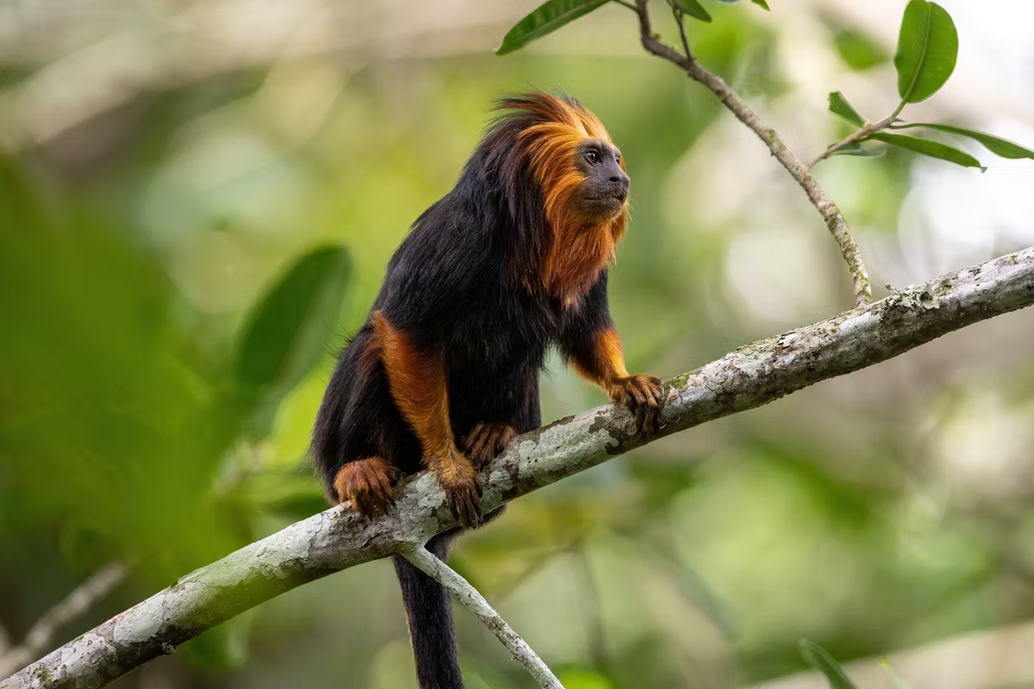
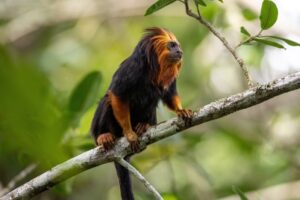
A population survey of Leontopithecus chrysomelas in its original range and a vegetation characterization of realized and potential habitats, for an assessment of high priority areas for conservation
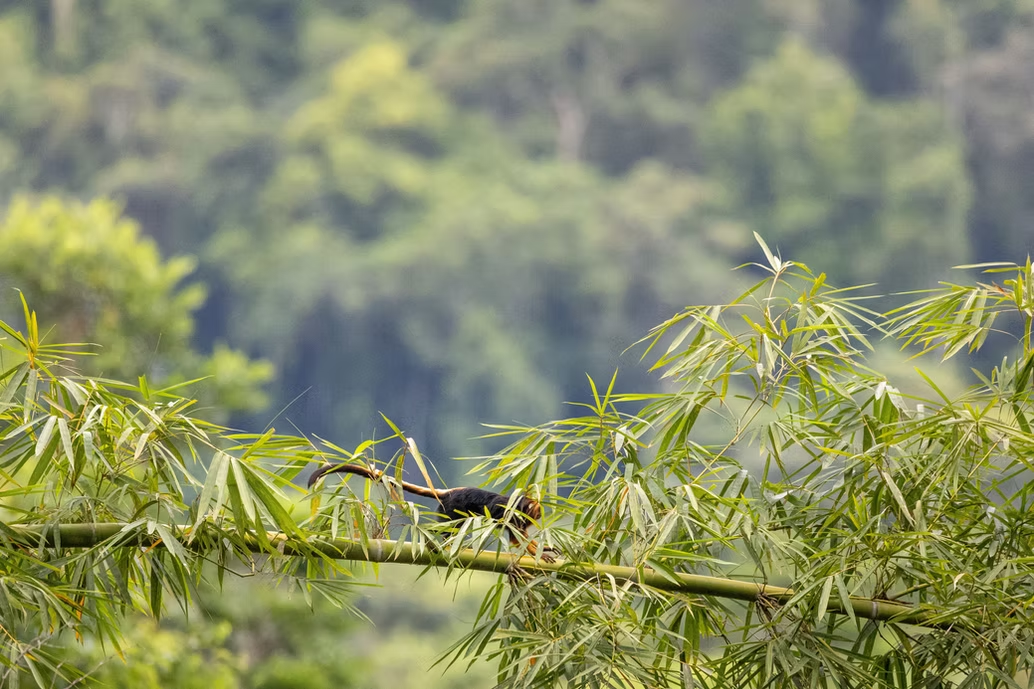
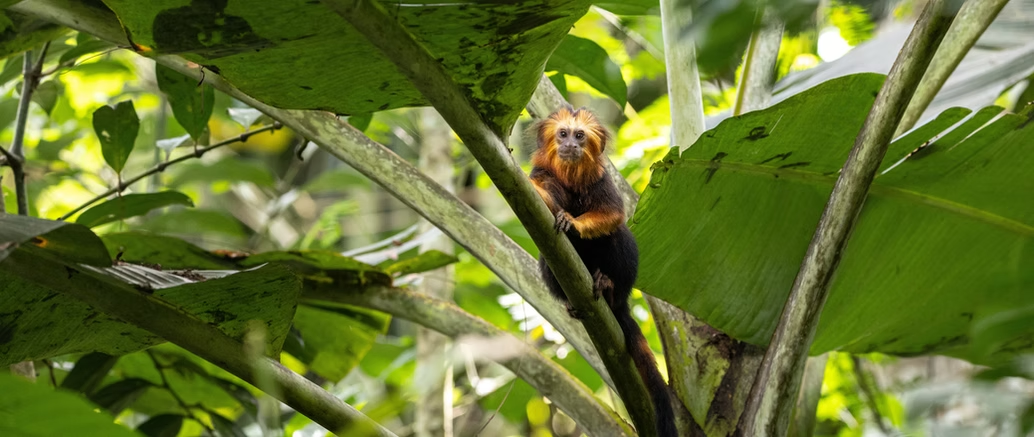
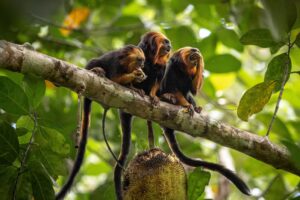
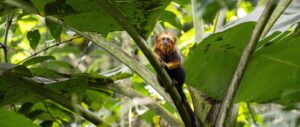
Only one population of lion tamarins, situated in the Una Biological and Wildlife Refuge, is viable and capable for a period of 100 years. However, assuming a scenario in which forested areas are connected by a matrix habitat, in this case cocoa agroforest (so called cabruca), suitable for dispersal of lion tamarins, their conservation in the wild is relatively secure. Agroforest can be defined as a complex multistrata agroforestry system based on shade-tolerant understorey crops such as cocoa or coffee grown under a complex and often species-rich canopy of native and/or planted trees. This forest-agriculture-system can thus provide habitat and resources for forest-dependent species that wouldn’t survive in a purely agricultural landscape, or may permit species dispersal in a fragmented landscape. The cabruca has been considered as an important habitat for the Mata Atlântica biodiversity for plants and animals. In contrast to many other forest dwelling animals, lion tamarins, uses disturbed and regenerating forests for foraging, for instance fruits, flowers, nectar, gum and animal prey. Especially fruits are available in large quantities in secondary forests and cabrucas, caused by a better light availability as in primary forests. More than 60% of the habitable areas for lion tamarins is provided by cabrucas. Cabrucas can provide suitable conditions, moreover lion tamarins are in many areas the last remaining frugivorous mammals, putting them in a key role as seed vector for forest regeneration.
- Estimating the actual geographical distribution range and population number,
- Characterizing realized and potetial habitats,
- Identify ecological factors that limits the distribution of L. chrysomelas and to
- Identify current threats.
Project area
The project area includes the original habitat of golden-headed lion tamarins.
The project team
Our partners